Original Aspirations by the Lake and Mountains, A Long-Awaited Reunion: "Radiance and Myriad Phenomena — Chu Teh-Chun Art Retrospective" Opens at the China Academy of Art
"The root and source of my art lie in the Hangzhou National College of Art." —— Chu Teh-Chun
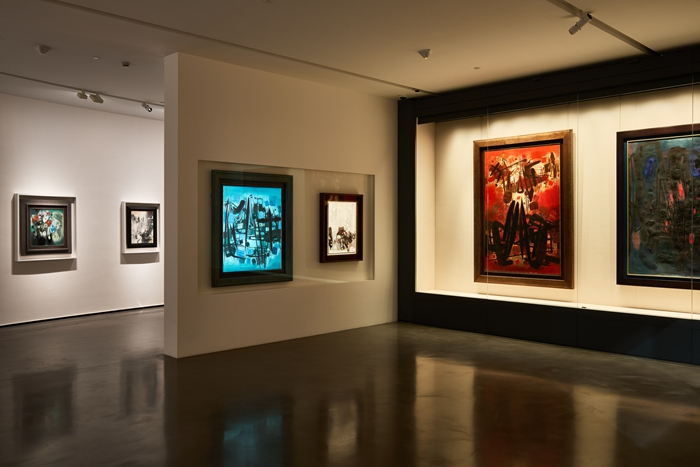
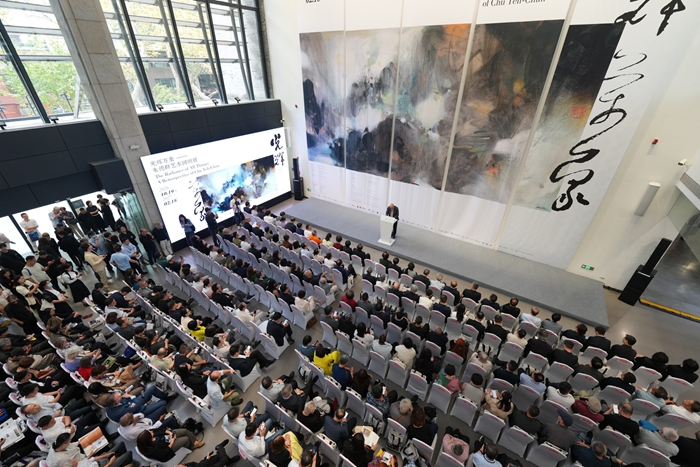 Opening ceremony of "The Radiance of All Things: A Retrospective of Chu Teh-Chun"
From the misty morning dawn at the southern foot of Solitary Hill by the West Lake to the dazzling lights along the Seine River, Chu Teh-Chun traversed over half a century of artistic wandering between the East and the West. In 2028, the China Academy of Art (CAA) will celebrate its centenary. As a prelude to the academy's major centennial academic projects, the "Radiance and Myriad Phenomena — Chu Teh-Chun Art Retrospective" opened on October 19 at the Art Museum of the China Academy of Art.
Nearly a century later, the works of this internationally renowned French-Chinese artistic giant and the first Chinese-born lifetime academician of the Académie des Beaux-Arts have returned to the spiritual origin that nurtured his earliest artistic vision. His wife, Madame Dong Jingzhao (Thérèse Ching-Chao Chu), wrote affectionately: "This is not merely a return of artworks, but a retrospective gaze across time and space."
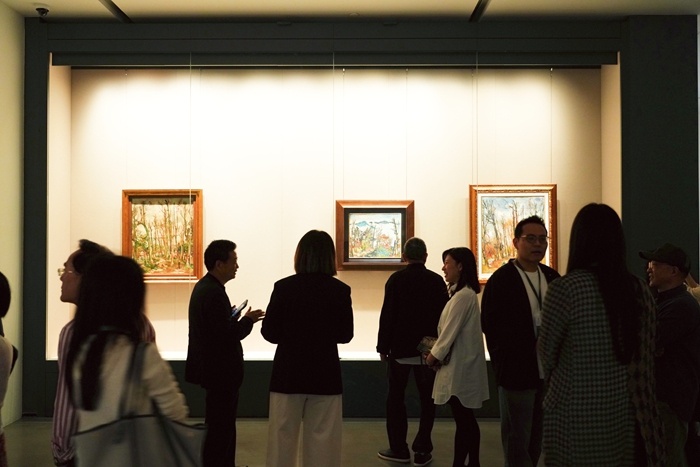 Exhibition view of "The Radiance of All Things: A Retrospective of Chu Teh-Chun"
In the long river of modern Chinese art and the century-old lineage of the China Academy of Art, the first generation of pioneers—Lin Fengmian, Pan Tianshou, and Wu Dayu—established the academic ideal of "harmonizing Eastern and Western art to create art of the era." Meanwhile, Chu Teh-Chun, along with Wu Guanzhong and Zao Wou-Ki, represents the second generation of outstanding masters.
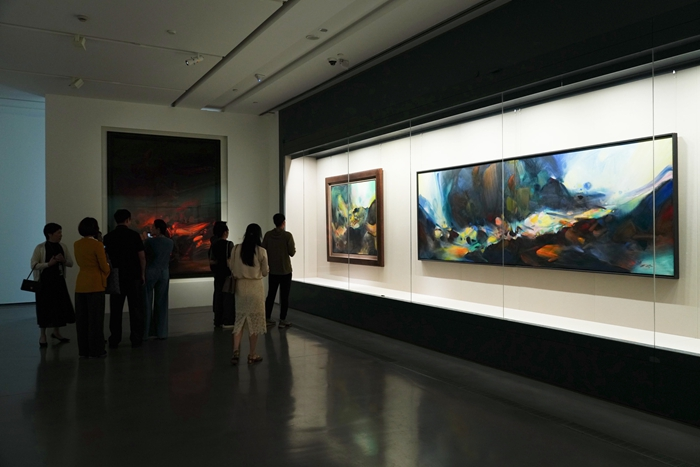 Exhibition view of "The Radiance of All Things: A Retrospective of Chu Teh-Chun"
In the exhibition foreword Let the Sky Cast Flowing Light, former CAA President Xu Jiang emotionally recalled a scene from Chu Teh-Chun's 2010 retrospective at the National Art Museum of China: "Mr. Wu Guanzhong was still alive at the time and gladly attended. Walking briskly, he took me through the exhibition for nearly two hours. Gazing at and commenting on each painting, his words overflowed with a deep understanding of his lifelong friend and the passion of a true confidant. Pointing to a waterfall-like torrent, he explained the importance of how the rocks were arranged in the painting; he then took me back twice to an early 1960s painting with subtle dark halos, saying it was his absolute favorite." "That deep mutual understanding in the souls of those who share the same aspirations" bears witness to a friendship that transcended time and borders, as well as the spiritual demeanor nurtured by the West Lake.
Exhibition view of "The Radiance of All Things: A Retrospective of Chu Teh-Chun"Upon the opening of the exhibition, Chu Teh-Chun's family generously donated 57 of his important artworks to the CAA, along with 1 sculpture by Albert Féraud, a lifetime academician of the Académie des Beaux-Arts, from Chu's personal collection. This allows the master's lifeblood to permanently reside in his alma mater, serving as rich soil to nourish a new generation of young scholars.
Exploring the Exhibition: "Radiance and Myriad Phenomena" Constructed Across Six Sections
"Radiance" points to the pursuit of light in Western art, while "Myriad Phenomena" is rooted in the endless vitality of the Eastern cosmic view. The exhibition gathers approximately 260 important artworks and precious documents from Chu Teh-Chun's lifetime (including 107 oil paintings), unfolding his majestic artistic life through six chapters.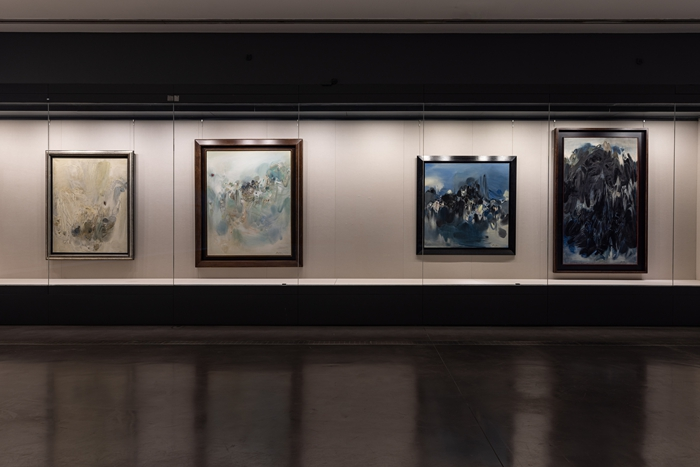
Section 1: Original Aspirations by the Lake and Mountains
Tracing the starting point of Chu's academic lineage. From studying both Chinese and Western art and being deeply inspired by Cézanne during his time at the National College of Art, to his resolute shift towards abstract expressionism inspired by Nicolas de Staël after moving to France in 1955, the artistic rigor and exploratory courage built by the West Lake remained the spiritual backdrop throughout his life.Section 2: Mists of Nature
Showcasing Chu's transformative journey of learning from the ancients and from nature. From the Three Gorges and Mount Huang to the Alps, Chu studied the brushwork of Fan Kuan, Guo Xi, and the "Four Masters of the Southern Song," transforming the rhythmic structure of Chinese landscape painting and the dynamic tempo of wild cursive calligraphy into surging waves and thunder on his abstract canvases. By the Jialing River, the earliest work in the exhibition painted in 1951, is a true expression of "the great river flowing horizontally, brushstrokes rolling like volumes, and heaven and earth blending into chaos."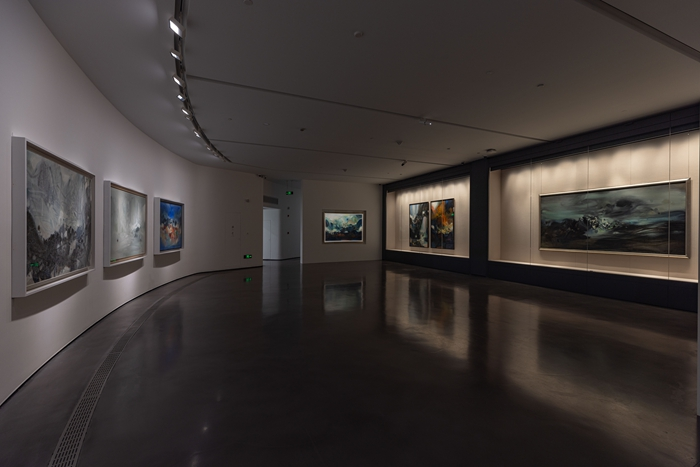
Section 3: Aura of Light and Color
Focusing on Chu's philosophical epiphany regarding "light." While viewing the Rembrandt 300th anniversary exhibition in Amsterdam in 1969, Chu realized that light does not need to come from outside the canvas but emerges from the depths of the painting itself. The linseed oil and chiaroscuro of Western oil painting, combined with the transparent aura and poetic imagery of Eastern ink wash, gave birth to the "magical light spots" that burst open in the center of his canvases, casting forth infinite vitality.Section 4: Harmonious Universe
Revealing the spiritual landscape of Chu's later years, adopting the I Ching's (Book of Changes) yin-yang transformations as a cosmic worldview. The fiercely bright "Yang" and the dark, moist "Yin" overlap and generate each other. The gallery specially presents documents and creations related to Symphony of Revitalization, a colossal work Chu created for the Shanghai Grand Theatre, praising the soaring rise and revival of his Eastern homeland with a splendid and majestic musical movement.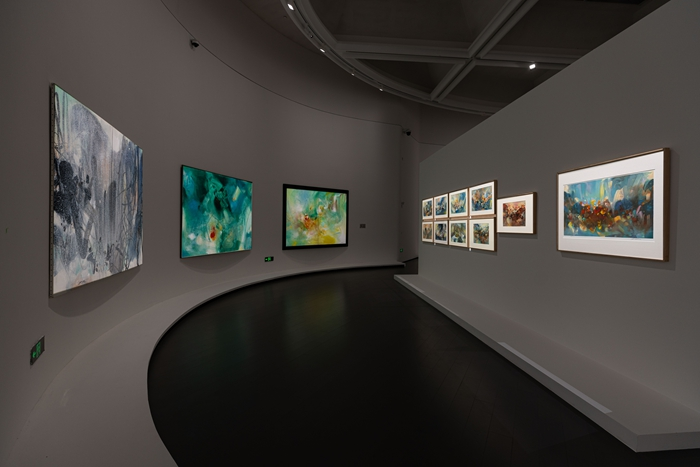
Section 5: Walking with the Century
Laying out the echoes of the star-studded art world of the 20th century. From his former mentors and friends Lin Fengmian, Pan Tianshou, and Wu Dayu, to his classmates and close friends Wu Guanzhong and Li Lincan, and later to his Western artist friends in Paris such as Albert Féraud, Yu Boruan, and Cabanne, the section witnesses the magnificent scroll of Eastern and Western cultures clashing and integrating.Section 6: Stream of Life
"Like the old farmers of my hometown, I am a 'worker in the sun'." Through a detailed chronological biography and precious documentary footage, this section restores the master's unadorned and diligent life. It also integrates digital interactive technology to create an immersive art scene, allowing audiences to step into the illusory realm where colors and brushstrokes flow and evolve, personally feeling the master's pure heart.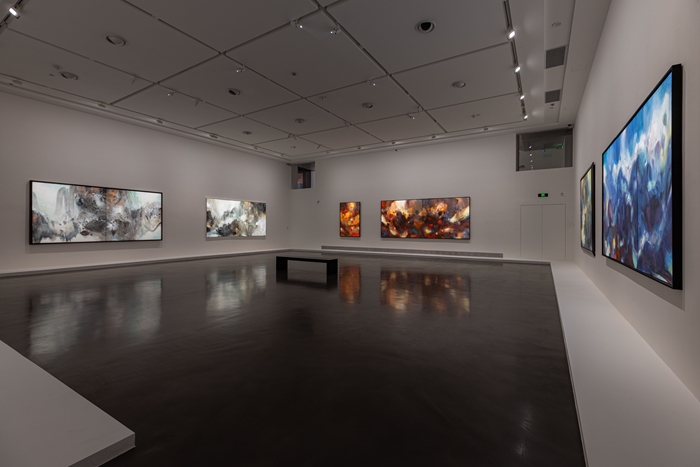
As Yu Xuhong, President of the China Academy of Art, pointed out, the academic foundation established by Cai Yuanpei and Lin Fengmian when they founded the National Academy of Art was the fundamental starting point of Chu Teh-Chun's lifelong artistic journey. Chu's wife, Madame Dong Jingzhao, left a message for the younger generation: "The transmission of art is never about repetition, but about finding one's own voice between inheritance and breakthrough. The true life of an artwork perhaps truly begins when it once again meets a new gaze."
Facing the question of "What can painting do?" in an era of uncertainty, Chu Teh-Chun provided an answer through his grand artistic journey across East and West. Light is formless; myriad phenomena possess a soul. By the shores of West Lake, this encounter across time and space awaits every viewer to step within and listen to the flowing musical movement of light breaking dawn from the depths of the universe.
It is reported that the exhibition will run until February 18, 2027.
Selected Artworks on Display:
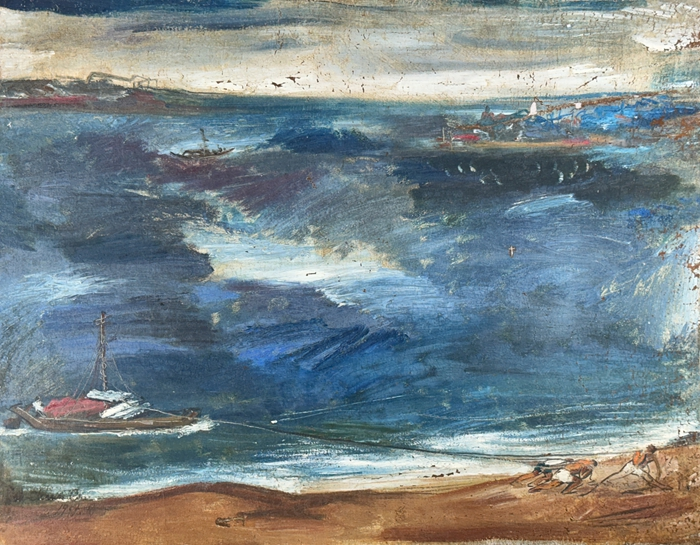 Chu Teh-Chun, By the Jialing River, Oil on canvas, Private collection, 1951, 64.5×81cm
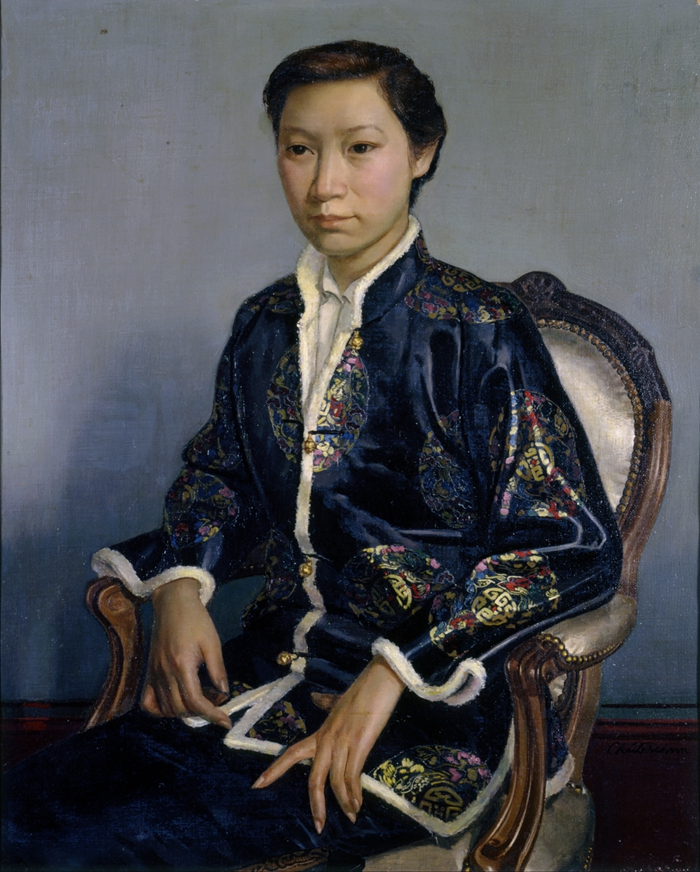 Chu Teh-Chun, Portrait of Ching-Chao, Oil on canvas, Private collection, 1956, 81×65cm
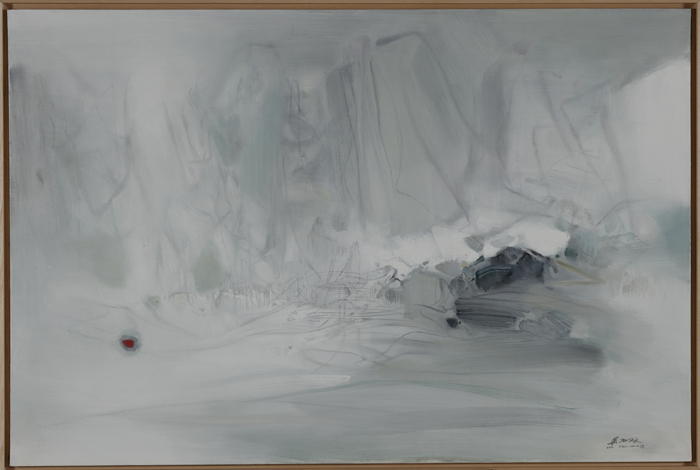 Chu Teh-Chun, The Same Hue of Water and Sky, Oil on canvas, Donated by the French Contemporary Art Association, Collection of LAAC Dunkerque, © Emmanuel Watteau, 1978, 130×195cm
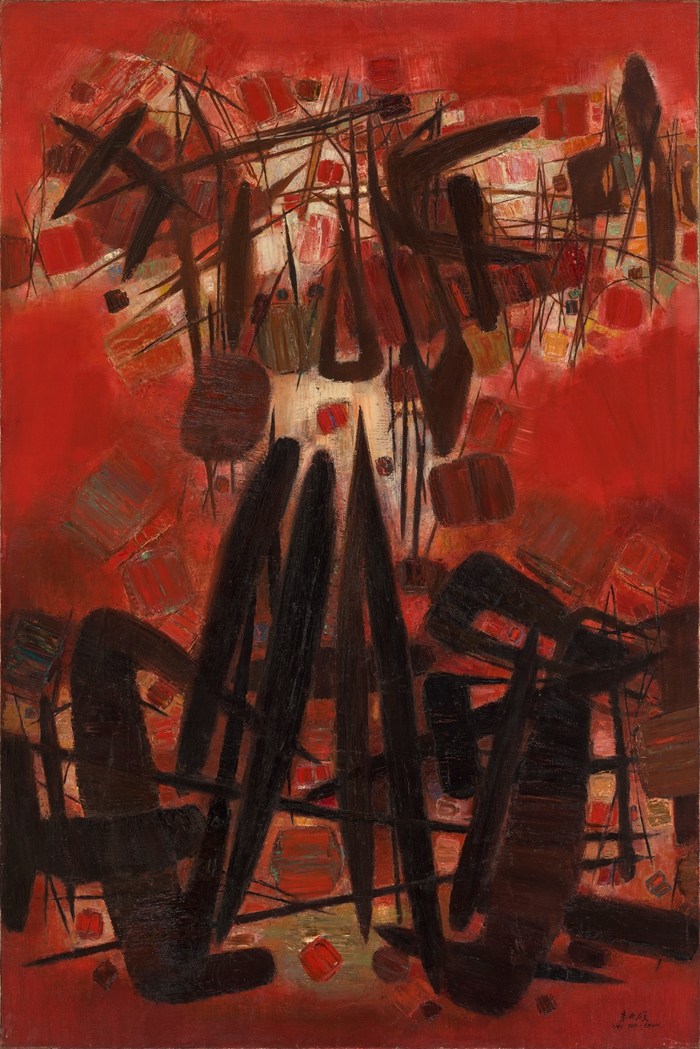 Chu Teh-Chun, No. 53 Red Rain Village, White Cloud House, Oil on canvas, Private collection, 1960, 195×130cm
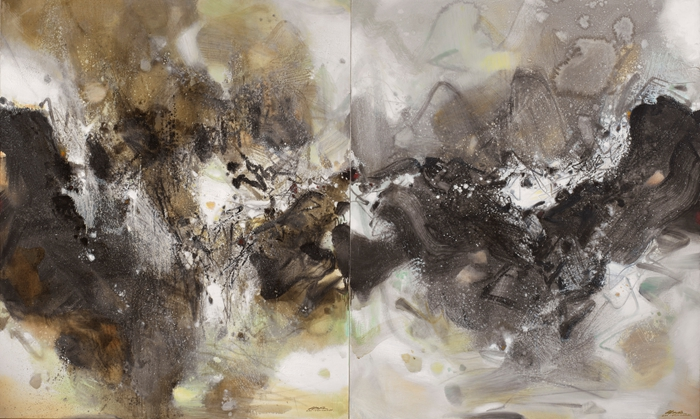 Chu Teh-Chun, Return from Geneva, Diptych, Oil on canvas, Private collection, 1985, 157×260cm
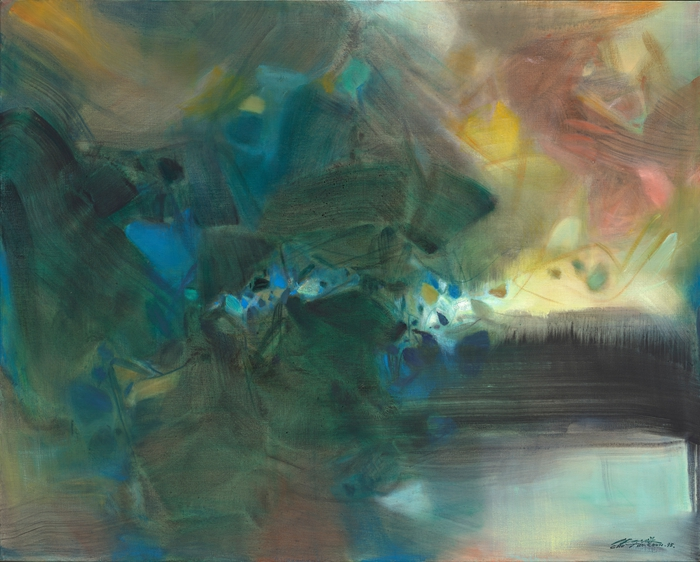 Chu Teh-Chun, Homage to Turner, Oil on canvas, Private collection, 1995, 130×162cm
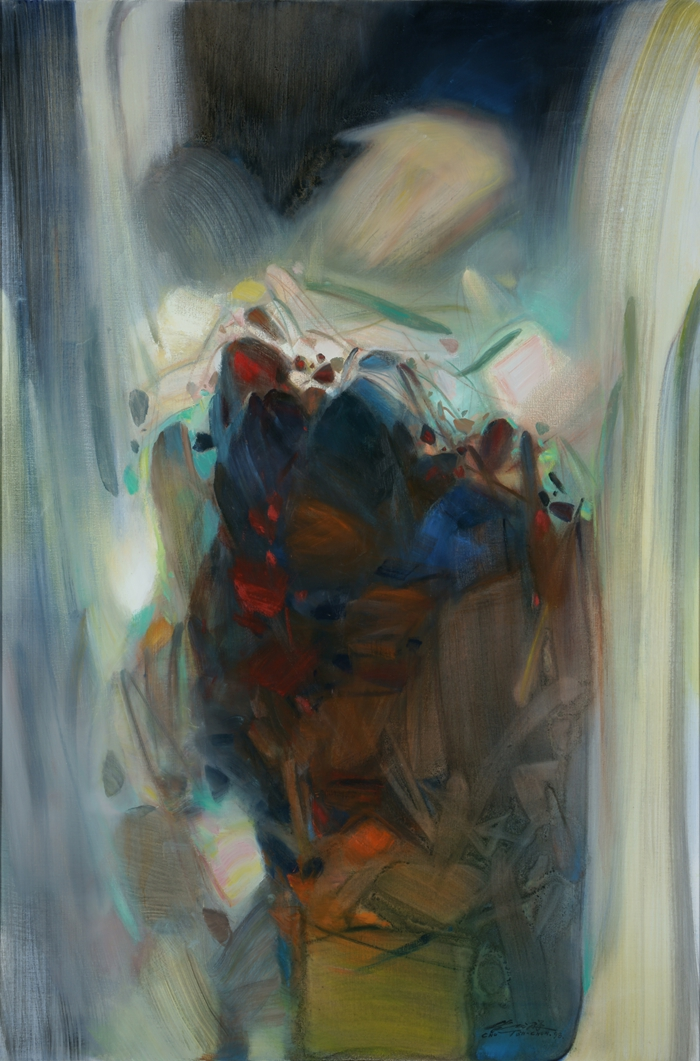 Chu Teh-Chun, Between East and West, Oil on canvas, Donated by Fondation Chu Teh-Chun, Collection of the Art Museum of China Academy of Art, 1998, 195×130cm
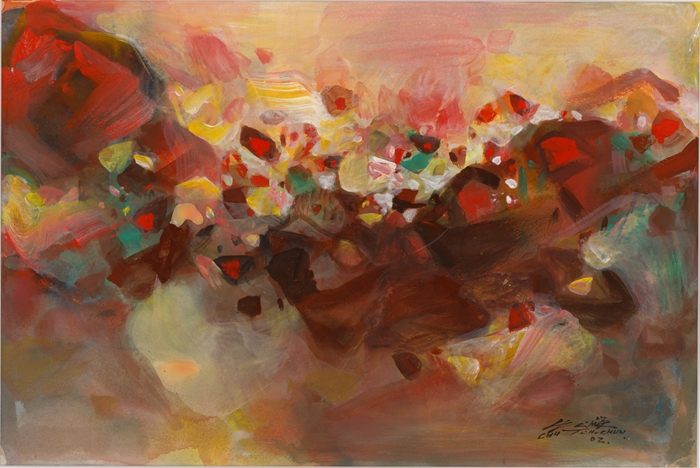 Chu Teh-Chun, Festive Symphony (Preparation No. 9), Acrylic on paper, Collection of Shanghai Grand Theatre, 2002, 37×56cm
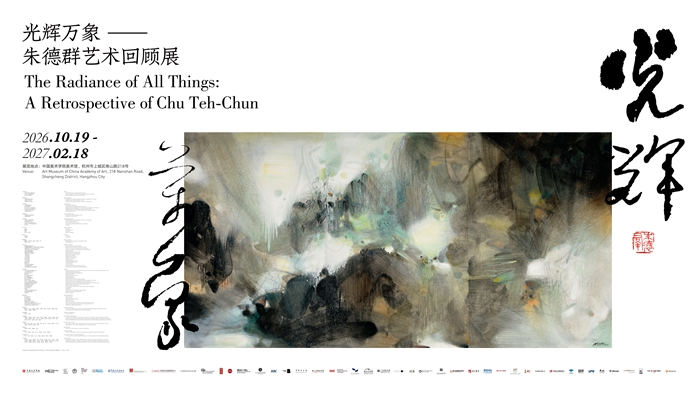 Exhibition poster
Radiance and Myriad Phenomena — Chu Teh-Chun Art Retrospective
Dates: October 19, 2026 – February 18, 2027
Location: Art Museum of the China Academy of Art (No. 218 Nanshan Road, Hangzhou)
Further reading
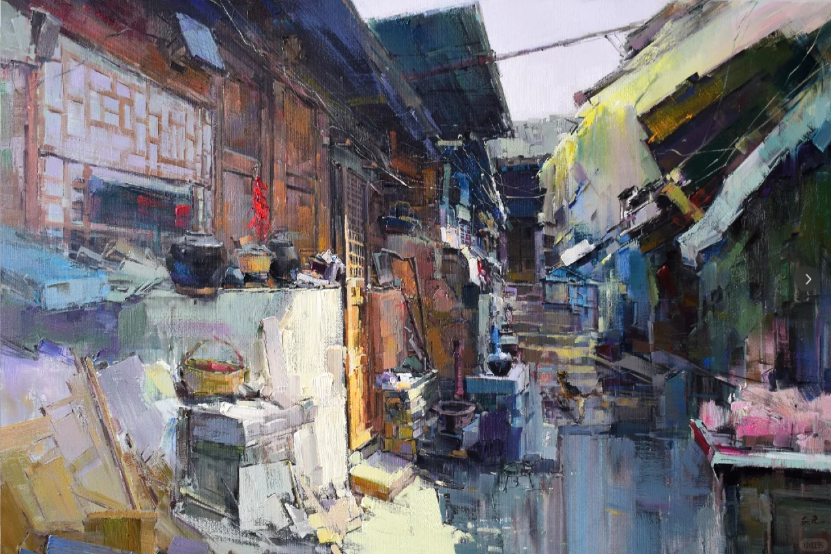
Artist of the Day | Zhao Yanliang
Zhao Yanliang was born in 1986 in Langfang, Hebei Province. He graduated from the Hebei Vocational Art College, pursued advanced studies at the Tianjin Academy of Fine Arts, and graduated from the Advanced Research Class of the Bai Yuping Studio at the Beijing Fine Art Academy in 2020.
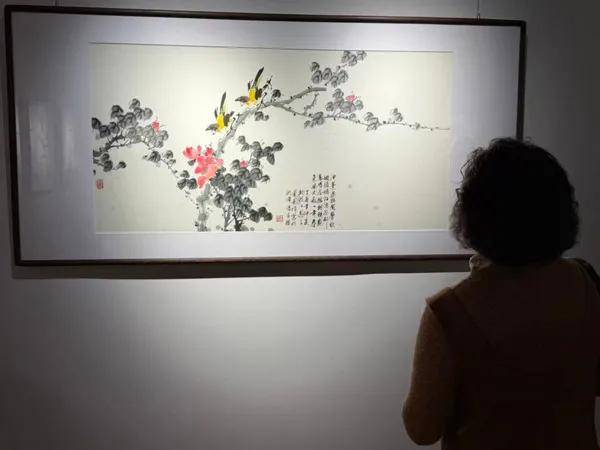
61 Works Showcase an Artistic Quest: "Endless Faint Fragrance – Zeng Jingxiang's Freehand Flower-and-Bird Painting Exhibition" Opens in Xiangtan
The exhibition features 61 of Zeng's freehand flower-and-bird works. It runs until November 21 and is open to the public free of charge.
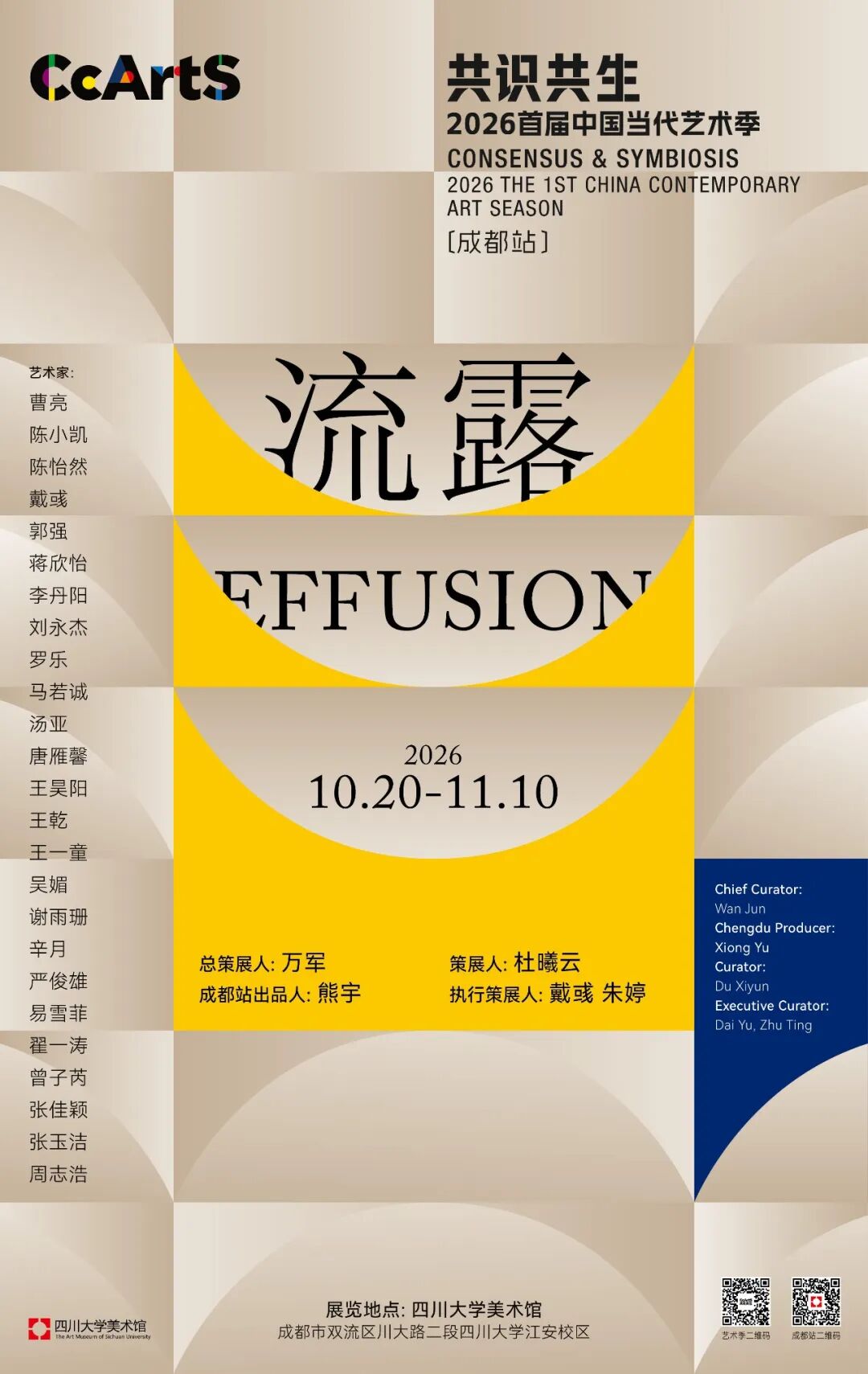
EFFUSION | Consensus and Symbiosis — The 1st Chinese Contemporary Art Season 2026 • Chengdu Station
We are living in an era of highly surplus visual information. Images are produced, disseminated, and reproduced at an unprecedented speed, and artificial intelligence has made image generation even easier. While the tools of expression are multiplying, discovering a truly personal artistic language does not necessarily become any easier.